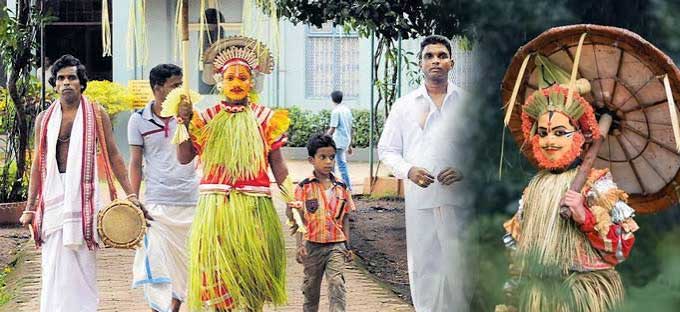
The Traditional Monsoon Folk Festival of Udupi & Mangalore
Aati Kalanja is one of the oldest and most fascinating folk traditions of Tulu Nadu, celebrated during the monsoon season in the districts of Udupi and Dakshina Kannada (Mangalore), Karnataka. This unique cultural practice reflects the deep connection between people, nature, agriculture, and traditional beliefs that have shaped the lives of Coastal Karnataka for centuries.
Unlike modern festivals celebrated with grand stages and decorations, Aati Kalanja is a simple village tradition where a performer dressed entirely in fresh green leaves visits homes to bless families and pray for prosperity, good health, timely rainfall, and a successful harvest. The tradition continues to preserve the cultural identity of Tulu speaking communities and offers visitors an authentic glimpse into the rural heritage of the region.
Introduction
Experience the Living Heritage of Tulu Nadu
Aati Kalanja is a traditional folk ritual celebrated during Aati, the fourth month of the Tulu calendar, which generally falls between mid July and mid August. This period coincides with the peak monsoon season in Coastal Karnataka, when lush green landscapes, overflowing rivers, and paddy fields define the region’s natural beauty.
The word “Aati” refers to the monsoon month in the Tulu calendar, while “Kalanja” refers to a colourful folk character dressed in leaves who visits homes to offer blessings. The festival is deeply rooted in the agricultural lifestyle of the people of Tulu Nadu and symbolizes hope, prosperity, and gratitude towards nature.
For generations, farming communities believed that the rainy season was a time to seek divine blessings for healthy crops, protection from diseases, and the well being of families and livestock. As a result, Aati Kalanja became an important village tradition where performers travelled from house to house, singing traditional songs, interacting with families, and receiving offerings such as rice, coconuts, vegetables, and grains.
Today, Aati Kalanja is celebrated in many villages across Udupi, Kundapura, Karkala, Hebri, Mangalore, Bantwal, Puttur, Belthangady, and other parts of Coastal Karnataka. Cultural organisations, schools, and heritage groups also organise performances to educate younger generations about this unique tradition.
For travellers visiting Udupi or Mangalore during the monsoon season, Aati Kalanja provides an unforgettable opportunity to witness authentic Tulu culture. The vibrant leaf costumes, traditional songs, village hospitality, and peaceful rural atmosphere make it one of the most distinctive cultural experiences in Karnataka.
Whether you are a cultural enthusiast, photographer, researcher, or traveller looking to explore the hidden traditions of Coastal Karnataka, Aati Kalanja offers an enriching journey into the living heritage of Tulu Nadu.
What is Aati Kalanja?
A Traditional Folk Character of Tulu Nadu
Aati Kalanja is a centuries old folk tradition in which a performer dresses entirely in green leaves and natural materials before visiting homes throughout the village during the Aati month. The performer is welcomed by families, who receive blessings for prosperity, good health, abundant harvests, and protection from hardships.
The festival is closely linked to the traditional rural lifestyle of Coastal Karnataka and continues to be an important part of the cultural identity of the Tulu speaking community.
Meaning of Aati Kalanja
The name Aati Kalanja has its roots in the Tulu language.
- Aati refers to the fourth month of the traditional Tulu calendar, celebrated during the peak monsoon season.
- Kalanja refers to the leaf clad folk character who represents blessings, prosperity, and harmony with nature.
Together, Aati Kalanja symbolizes hope, renewal, and the close relationship between human life and the natural environment.
The Traditional Folk Character
The Kalanja performer is easily recognised by the striking costume made from fresh green leaves collected from nearby forests and farms.
The costume often includes:
- Coconut leaves
- Arecanut fronds
- Banana leaves
- Wild flowers
- Natural vines
- Handmade ornaments
- Traditional headgear
Completely covered in greenery, the performer becomes a living symbol of nature and abundance, reflecting the importance of forests, rainfall, and agriculture in village life.
The Beautiful Leaf Costume Tradition
One of the most fascinating aspects of Aati Kalanja is the elaborate costume prepared using natural materials.
Every leaf is carefully arranged by experienced villagers to create a costume that is both artistic and symbolic. Unlike artificial decorations, the use of fresh leaves represents fertility, new life, and the blessings of nature.
The preparation itself is a community activity where elders pass on traditional knowledge to younger generations, ensuring that the craftsmanship behind Aati Kalanja continues to survive.
A Village to Village Celebration
Unlike festivals held at a single venue, Aati Kalanja is celebrated across villages.
The performer travels from one house to another, accompanied by local residents or fellow performers. At each home, traditional songs are sung, blessings are offered, and families welcome the visitor with respect.
The celebrations create a joyful atmosphere throughout the village and encourage social interaction among neighbours.
This house to house tradition strengthens relationships within the community while preserving local customs that have existed for generations.
Blessings for Families
The main purpose of Aati Kalanja is to bless every household.
Families believe the visit brings:
- Good health
- Prosperity
- Family happiness
- Protection from illness
- Timely rainfall
- Successful farming
- Peace and harmony
In return, households offer rice, coconuts, vegetables, fruits, betel leaves, arecanuts, or small donations as a gesture of gratitude and respect.
The exchange represents mutual goodwill and reinforces the strong sense of community found in rural Tulu Nadu.
Importance in Rural Life
For farming communities, Aati Kalanja is more than a cultural performance.
It reminds people of:
- Their dependence on nature
- The importance of rainfall
- Agricultural traditions
- Respect for village customs
- Community unity
- Environmental harmony
Although modern lifestyles have changed many aspects of village life, Aati Kalanja continues to preserve these timeless values and remains a cherished part of Coastal Karnataka’s cultural heritage.
History of Aati Kalanja
Aati Kalanja has been practised in Tulu Nadu for many generations and is regarded as one of the oldest surviving folk traditions of Coastal Karnataka. While there are few written historical records documenting its exact origin, the festival has been preserved through oral traditions, village customs, and community participation.
The continued celebration of Aati Kalanja demonstrates the strong cultural identity of the people of Udupi and Dakshina Kannada, where traditional knowledge is passed from one generation to the next.
Ancient Origins
An Early Village Tradition
Aati Kalanja is believed to have originated in small farming villages where agriculture was the primary occupation. During the monsoon season, when heavy rains limited outdoor work, villagers performed rituals seeking blessings for their families, livestock, and crops.
The leaf-clad performer became a symbol of nature’s protection and prosperity, visiting homes to spread goodwill throughout the village.
Preserved Through Oral History
Unlike many historical festivals documented in books, Aati Kalanja has survived mainly through oral storytelling.
Village elders have traditionally passed down knowledge about:
- Costume preparation
- Traditional songs
- Rituals
- Cultural values
- Seasonal customs
These oral traditions have ensured that Aati Kalanja continues to be celebrated even as lifestyles have changed over time.
A Valuable Heritage of Tulu Nadu
Today, Aati Kalanja is recognised as an important part of the cultural heritage of Tulu Nadu.
The festival reflects:
- Traditional agricultural practices
- Respect for nature
- Community participation
- Folk art
- Indigenous knowledge
- Rural spirituality
It remains one of the best examples of how local traditions have shaped the cultural identity of Coastal Karnataka.
Evolution Over Time
From Village Ritual to Cultural Celebration
For centuries, Aati Kalanja was celebrated exclusively within rural farming communities. Every village followed its own customs while maintaining the common purpose of seeking blessings during the monsoon season.
As transportation, education, and urbanisation increased, the festival gradually became known beyond village communities.
Today, schools, colleges, cultural organisations, and tourism events frequently organise Aati Kalanja performances to introduce younger generations and visitors to this remarkable tradition.
Preserving Tradition in Modern Times
Although many villages have modernised, Aati Kalanja continues to thrive because local communities actively preserve it.
Efforts include:
- Community led celebrations
- School cultural programmes
- Folk art festivals
- Heritage exhibitions
- Documentation by researchers
- Promotion through tourism initiatives
These activities help ensure that the tradition remains relevant while maintaining its original cultural significance.
Role of Cultural Organizations
Several cultural associations, folklore academies, educational institutions, and local community groups play an important role in preserving Aati Kalanja.
Their contributions include:
- Organising awareness programmes
- Conducting traditional performances
- Training young participants
- Documenting folklore and rituals
- Promoting Tulu culture through festivals
- Encouraging responsible cultural tourism
These collective efforts have helped Aati Kalanja gain wider recognition as one of the most distinctive folk traditions of Udupi, Mangalore, and the wider Coastal Karnataka region.
Why Aati Kalanja is a Must Experience Tradition
Aati Kalanja is more than a seasonal celebration it is a living expression of the values, traditions, and agricultural heritage of Tulu Nadu. Its vibrant leaf costumes, house-to-house blessings, and strong connection with nature make it a unique cultural experience that cannot be found elsewhere. For anyone exploring Udupi and Mangalore during the monsoon, witnessing Aati Kalanja offers a deeper understanding of the region’s history, community spirit, and enduring folk traditions.
Significance of Aati Month
Why is the Aati Month Important in Tulu Nadu?
The Aati month is one of the most significant periods in the Tulu calendar and holds great cultural, agricultural, and spiritual importance for the people of Udupi and Dakshina Kannada (Mangalore). It usually falls between mid July and mid August, when the southwest monsoon is at its peak in Coastal Karnataka.
For centuries, the people of Tulu Nadu have considered Aati as a month of devotion, simplicity, and respect for nature. During this period, many traditional rituals, folk customs, and seasonal practices are observed to seek good health, prosperity, and protection for families and farmlands.
Unlike many festive months that focus on celebrations and grand feasts, Aati is a time for prayers, traditional food, folk rituals, and community gatherings that strengthen the bond between people and nature.
Aati in the Tulu Calendar
The Tulu calendar is the traditional calendar followed by the Tulu speaking communities of Coastal Karnataka. Each month has its own cultural and agricultural significance, and Aati is considered one of the most important months because it marks the height of the rainy season.
During Aati:
- Heavy rainfall nourishes rivers, forests, and paddy fields.
- Farmers closely monitor the growth of newly planted rice crops.
- Villages celebrate traditional rituals connected with nature.
- Families prepare seasonal herbal foods believed to improve health during the rainy season.
- Folk traditions like Aati Kalanja are observed to preserve the cultural heritage of Tulu Nadu.
Even today, many families continue to follow these customs as part of their cultural identity.
Importance of the Monsoon
The monsoon is the lifeline of Coastal Karnataka.
The districts of Udupi and Mangalore receive abundant rainfall every year, making the region one of the greenest parts of Karnataka. This rainfall is essential for agriculture, drinking water, forests, rivers, and local ecosystems.
For farming communities, the arrival of the monsoon means:
- Beginning of the agricultural cycle
- Healthy paddy cultivation
- Water for irrigation
- Better crop growth
- Prosperity for villages
Since people’s lives depended heavily on rainfall, many traditional customs developed to express gratitude to nature and seek blessings for a successful farming season. Aati Kalanja is one such tradition that continues to connect people with the environment.
The Agricultural Season
Agriculture has always been the backbone of rural life in Tulu Nadu.
During the Aati month:
- Paddy fields remain filled with rainwater.
- Newly planted rice begins to grow.
- Farmers spend time maintaining their fields.
- Villages pray for favourable weather and abundant harvests.
Although modern farming methods have changed agriculture, the traditions associated with Aati continue to remind people of the importance of farming and the role nature plays in everyday life.
Aati Kalanja beautifully reflects this agricultural heritage by celebrating the close relationship between farmers, land, rain, and community.
Traditional Beliefs During Aati
The people of Tulu Nadu have long believed that the Aati month is a special time for seeking divine blessings and living in harmony with nature.
Many traditional practices are followed to:
- Pray for family well being
- Protect livestock
- Ensure healthy crops
- Maintain peace in the village
- Seek blessings for prosperity
Families also visit temples, participate in local rituals, and observe customs that have been followed for generations.
These traditions continue to strengthen the cultural identity of Coastal Karnataka.
Seasonal Rituals During Aati
Several unique customs are observed during the Aati month.
Some of the well known traditions include:
- Aati Kalanja performances
- Aati Amavase rituals
- Preparation of seasonal herbal foods
- Temple visits and prayers
- Community gatherings
- Traditional folk songs
- Worship for good harvests
These rituals reflect the wisdom of earlier generations, who closely linked their lifestyle with the changing seasons.
Why is Aati Kalanja Celebrated?
A Festival That Celebrates Nature, Prosperity, and Community
Aati Kalanja is much more than a colourful folk performance. It is a traditional ritual that expresses gratitude to nature and seeks blessings for the well being of families and farming communities.
For generations, villagers have celebrated Aati Kalanja with the belief that the blessings offered during the festival bring happiness, prosperity, and protection throughout the year.
Seeking Blessings
The primary purpose of Aati Kalanja is to seek blessings for every household.
When the leaf clad performer visits homes, families receive prayers for:
- Good health
- Peace and happiness
- Prosperity
- Success in farming
- Protection from difficulties
The blessings symbolize hope for a better future and strengthen the spiritual connection between the community and nature.
Prayers for Good Rainfall
Rain is the foundation of agriculture in Coastal Karnataka.
Since the festival is celebrated during the monsoon season, one of its important objectives is to pray for:
- Timely rainfall
- Adequate water supply
- Healthy rivers and lakes
- Successful farming season
Good rainfall has always been essential for the livelihoods of farming families, making this tradition deeply meaningful.
Healthy Crops and Abundant Harvests
A successful harvest depends on healthy crops.
During Aati Kalanja, farmers pray for:
- Strong crop growth
- Fertile fields
- Protection from pests
- High agricultural yield
The festival reflects the close relationship between people, farming, and nature that has existed in Tulu Nadu for centuries.
Family Prosperity
Every family welcomes the Kalanja performer with respect because the visit is believed to bring prosperity.
Families pray for:
- Financial well being
- Peaceful family life
- Children’s health
- Success in education
- Happiness for future generations
The blessings offered during Aati Kalanja strengthen family values and community relationships.
Protection from Diseases
The Aati month coincides with the rainy season, when illnesses were traditionally more common in villages.
People believed that prayers and traditional rituals performed during Aati Kalanja would help protect families from:
- Seasonal illnesses
- Epidemics
- Misfortune
- Natural calamities
Although healthcare has advanced considerably, the festival continues to be observed as a symbol of hope, well being, and community care.
Promoting Community Harmony
One of the greatest strengths of Aati Kalanja is its ability to bring people together.
The festival encourages:
- Cooperation among villagers
- Respect for elders
- Sharing with neighbours
- Preserving traditions
- Helping one another
The house to house visits create opportunities for social interaction and strengthen the spirit of unity within the village.
The Story Behind Aati Kalanja
A Tradition Passed Down Through Generations
Like many folk traditions of Tulu Nadu, Aati Kalanja has been preserved through stories shared by elders rather than written historical records.
These stories explain how communities developed rituals to express gratitude for nature’s blessings and to pray for a safe and prosperous future.
Although the exact origin varies from village to village, the message remains the same people must live in harmony with nature and support one another.
Local Folklore
According to local folklore, the leaf covered Kalanja represents nature visiting every home during the rainy season.
As the performer moves from house to house, families welcome the blessings and express gratitude for the gifts provided by forests, rivers, rain, and fertile land.
These stories continue to inspire younger generations to respect nature and preserve traditional customs.
Traditional Beliefs
For centuries, villagers believed that welcoming the Kalanja performer would bring:
- Prosperity
- Healthy crops
- Good fortune
- Peace
- Protection from hardships
The exchange of blessings and offerings symbolises mutual respect between families and the wider community.
Cultural Symbolism
Every element of Aati Kalanja has symbolic meaning.
The green leaves represent:
- New life
- Fertility
- Prosperity
- Nature’s abundance
- Agricultural success
The house to house visits symbolise unity, while the blessings reflect goodwill and compassion for every member of the village.
Respect for Nature
Perhaps the most important message of Aati Kalanja is respect for nature.
The festival reminds people that:
- Agriculture depends on rainfall.
- Forests support village life.
- Healthy ecosystems sustain farming.
- Human life and nature are closely connected.
This timeless message remains highly relevant today as communities work towards protecting the environment and preserving traditional knowledge.
Traditional Costume of Aati Kalanja
A Living Symbol of Nature
The costume of Aati Kalanja is one of the most distinctive features of the festival. Unlike costumes made from cloth or artificial materials, the Kalanja attire is created almost entirely from fresh leaves, flowers, and natural decorations collected from the surrounding environment.
The vibrant green appearance represents life, fertility, prosperity, and the blessings of the monsoon season.
Costume Materials
Coconut Leaves
Fresh coconut leaves are woven together to form the main body of the costume. Their flexibility and durability make them ideal for creating the layered appearance that gives the performer a striking natural look.
Arecanut Leaves
Arecanut leaves and fronds add texture and volume to the costume. Since arecanut cultivation is an important part of agriculture in Udupi and Mangalore, their use also reflects the close connection between the festival and local farming.
Banana Leaves
Broad banana leaves are sometimes incorporated into the costume to create decorative layers and enhance the traditional appearance. They symbolize growth, abundance, and prosperity.
Wild Flowers
Fresh seasonal flowers are added to bring colour and beauty to the costume. These flowers represent the richness of nature during the monsoon and highlight the artistic skills of the villagers who prepare the attire.
Natural Decorations
The costume is completed with a variety of locally available natural materials such as vines, grasses, woven fibre, and handmade ornaments. Every element is carefully arranged to create a unique appearance while maintaining harmony with the environment.
The use of eco friendly, biodegradable materials reflects the traditional wisdom of Tulu Nadu and demonstrates how Aati Kalanja celebrates nature without harming it. This sustainable approach continues to make the festival a remarkable example of the close relationship between people, culture, and the natural world in Udupi and Mangalore.