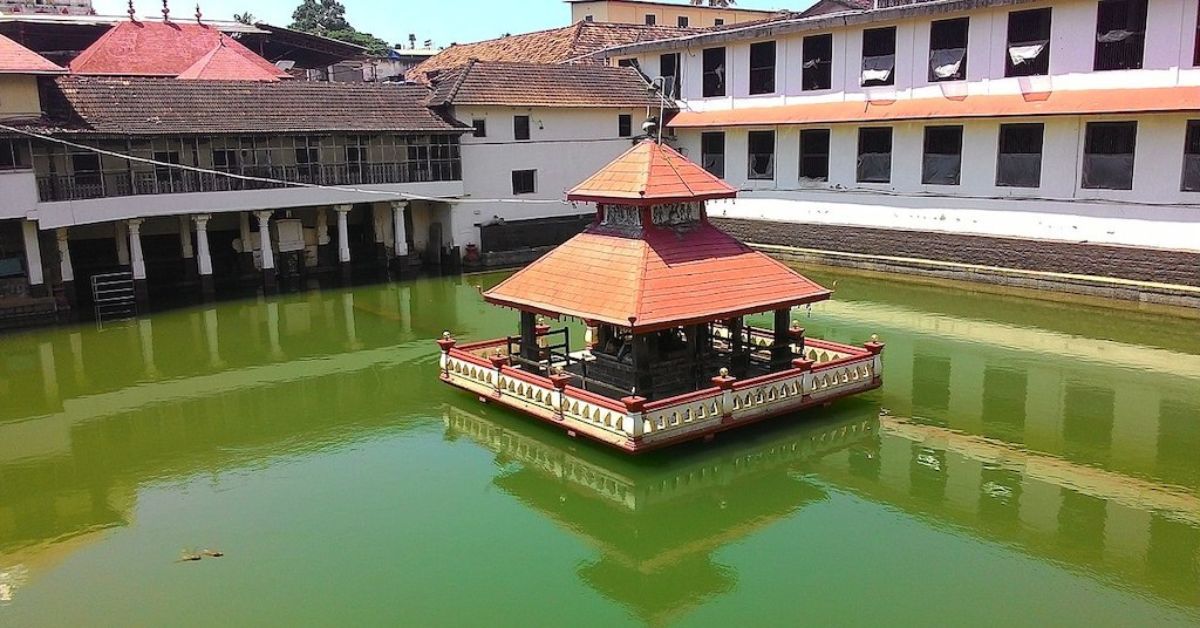
Udupi Sri Krishna Temple: A Heavenly Abode of Devotion
The coastal temple town of Udupi, located in Karnataka, earned its holy status on the religious map of India in the 13th century. It was during this period that the great saint and philosopher, Sri Madhvacharya, built Udupi as the epicenter of the Dvaita school of Vedanta. At the very heart of this ancient popular town stands the Udupi Sri Krishna Math, a temple uniquely distinct from almost any other Hindu temple in the world.
Unlike regular temples where you stand directly in front of an open sanctum sanctorum, here you worship Lord Krishna through a small, beautifully carved silver window with nine spaces. This window is universally known as the Kanakana Kindi (Kanaka’s Window – Read story of Bhakta Kanaka Dasa).
The temple is not just a place of worship; it is a living, breathing ashram. The surrounding area, known as Car Street (Ratha Beedi), houses the main temple along with eight ancient monasteries that have protected and continued the local spiritual traditions for over 700 years without a single day’s break.
The Miraculous History and Origin of the Idol Udupi Sri Krishna
To truly appreciate your visit to the Udupi Krishna Temple, it helps to understand the incredible stories passed down through generations. According to ancient texts and a famous 17th-century commentary by Sri Raghuvarya Theertha (a revered pontiff of the Palimar Math), the holy idol of Lord Krishna has a deep connection to the Dwapara Yuga and the city of Dwaraka.
Devaki’s Heartfelt Wish
The legend goes back to the time when Lord Krishna was an adult living as a king in Dwaraka. His biological mother, Devaki, felt a deep sadness because she had completely missed witnessing Krishna’s beautiful childhood leelas (playful acts) in Gokula, as she was imprisoned by King Kamsa.
To make his mother happy, Lord Krishna used his divine powers to temporarily turn back into a little child. He climbed onto Devaki’s lap, playfully drank her milk, broke her churning pots, and happily ate lumps of fresh butter. In this beautiful childhood form, he stood holding a churning rod (mantha) in one hand and a churning rope in the other.
Watching this divine sport filled Devaki with infinite joy. Rukmini, Lord Krishna’s queen, was also watching this beautiful sight. She became so deeply attached to this specific childhood posture of the Lord that she requested him to get a matching idol carved out of a holy Shalagrama Shila (sacred stone) so she could worship it daily.
The Journey from Dwaraka to the Coast of Malpe
When Lord Krishna finally departed from the earthly realm at the end of the Dwapara Yuga, the sacred idol worshipped by Rukmini was carefully hidden away by Arjuna at a quiet spot known as Rukmini Vana in Dwaraka.
As thousands of years passed and the world entered the Kali Yuga, the idol became heavily covered in a thick layer of Gopichandan (sacred yellow clay). A sea merchant from Dwaraka, completely unaware of the holy treasure hidden inside, picked up the heavy lump of clay to use as ship ballast to balance his cargo vessel.
While sailing past the western coast of Karnataka, the merchant’s ship encountered a massive, violent storm near the shores of Vadabhandeshwar (close to the modern Malpe Port). The ship was on the verge of breaking apart and sinking into the sea.
At that exact moment, Sri Madhvacharya was sitting by the beach, deeply absorbed in meditation. Through his intense spiritual intuition, he sensed that a ship was in grave danger and that it carried something highly sacred. He waved his saffron robe to calm the stormy sea waters. The storm magically settled down, and the ship safely reached the shore.
Out of deep gratitude, the merchant offered Sri Madhvacharya anything he wanted from the ship’s cargo. The saint calmly requested only the lump of Gopichandan. When the clay was washed away, the beautiful idol of Balakrishna (Child Krishna) holding a churning rod and rope was revealed to the world. Sri Madhvacharya kept the idol immersed in a holy tank for a few days before installing it on a highly auspicious Makara Sankranthi day, establishing the eternal foundation of Udupi’s spiritual heritage.
The Sacred Concept of the Ashta Mathas of Udupi
Sri Madhvacharya did not want the responsibility of taking care of Lord Krishna to fall on just one single person or family. To ensure that the daily worship would continue forever with strict spiritual purity, he selected eight of his closest, highly intellectual direct disciples and made them monks.
These eight monks established their own separate monastic lineages, which are collectively known worldwide as the Ashta Mathas of Udupi. Each Matha has its own headquarters located right around the main Car Street.
The eight holy monasteries (Ashta Mathas of Udupi) are named after the local villages where they originally held land:
Palimar Matha: First headed by Sri Hrishikesha Teertha
Aadamaru Matha: First headed by Sri Narasimha Teertha
Krishnapura Matha: First headed by Sri Janardhana Teertha
Puttige Matha: First headed by Sri Upendra Teertha
Shirur Matha: First headed by Sri Vamana Teertha
Sode Matha: First headed by Sri Vishnu Teertha
Kaniyoor Matha: First headed by Sri Rama Teertha
Pejavara Matha: First headed by Sri Adhokshaja Teertha
Every single one of these eight Mathas is completely responsible for protecting the traditions of the temple. They work closely together like a tightly knit family to keep the worship going smoothly.
The Evolution of the Udupi Paryaya Festival
In the early centuries after the temple was established, the system of management was very frequent. The Swamijis (head pontiffs) of the Eight Mathas would take turns to look after the daily poojas of Lord Krishna for just two months each.
However, in the 16th century, a highly celebrated, visionary saint named Sri Vadiraja Swami of the Sode Matha realized that a two month period was far too short to complete major temple improvements or plan long term welfare programs for pilgrims.
Sri Vadiraja Swami formally changed the rotation period from two months to two full years. This revolutionary system is known as the Paryaya System, and it continues exactly the same way to this day.
Paryaya Swamiji: The specific head monk who currently holds the responsibility of worshipping the deity and managing the temple properties.
Paryaya Matha: The specific monastery out of the eight that is currently running the administration.
Paryaya Festival: Held once every two years in the middle of January (usually on January 17th or 18th), this is a massive, colorful festival where the outgoing Swamiji hands over the official keys of the temple and the ancient Akshaya Patra (vessel of endless food) to the incoming Swamiji. It attracts lakhs of tourists from across the globe.
History of Kanakana Kindi Window
One of the most touching stories of devotion associated with the Udupi temple revolves around Kanakadasa, a great 16th-century poet, musician, and lower-caste saint.
During those ancient times, caste discrimination was deeply prevalent, and because of his social background, Kanakadasa was strictly forbidden from entering the temple premises to get a glimpse of the deity. Completely heartbroken but filled with absolute devotion, he sat outside the back wall of the temple, playing his musical instrument and singing beautiful, soulful Kannada bhajans praising Lord Krishna.
Immensely pleased by the pure, unselfish love of his devotee, a miracle occurred. The solid stone back wall of the temple cracked open, creating a small window. The idol of Lord Krishna, which originally faced east like standard Hindu temples, automatically turned completely around to face the west, giving a direct view to Kanakadasa standing outside.
To honor this incredible bond between God and a true devotee, Sri Vadiraja Swami later set up a beautiful silver-plated window over that exact crack in the wall. Even today, every single pilgrim who visits Udupi first looks through this nine-holed window to view the beautifully lit idol before entering the main temple doors.
Detailed Daily Rituals and Temple Timings of Udupi Krishna Temple
The daily schedule inside the Udupi Sri Krishna Math is maintained with extreme discipline. The temple doors open well before dawn, and a series of 14 distinct poojas and rituals are performed throughout the day.
General Public Darshan Timings of Sri Krishna Temple Udupi
- Morning to Night: 5:00 AM to 9:30 PM (Continuous darshan is usually available, but it may be briefly restricted during specific afternoon or night offering hours).
The Sequence of Main Poojas
If you wish to experience the absolute spiritual atmosphere of the Math, try to witness some of these key daily events:
| Time | Ritual Name | Description |
| 5:00 AM | Nirmalya Visarjana Pooja | The previous day’s flowers are removed, and the deity is cleaned. |
| 6:00 AM | Usha Pooja | Morning prayers performed as the sun begins to rise. |
| 8:30 AM | Akshaya Patra Pooja | Dedicated prayers to the endless vessel of food to ensure no visitor goes hungry. |
| 11:00 AM | Mahapooja | The grandest ritual of the afternoon with elaborate offerings and music. |
| 7:00 PM | Ranga Pooja & Chamara Seva | Evening oil lamps are lit across the corridors creating a magical glow. |
| 8:30 PM | Shayana Pooja | The final ritual where the Lord is put to rest with lullabies. |
Note: Timings can change slightly during major festival days, lunar/solar eclipses, or special Paryaya celebrations.
The Legendary “Anna Brahma” Tradition – The free meal for devotees
In Hindu tradition, Udupi is fondly called Anna Brahma Kshetra (The Land of the Food God). This is because the temple treats feeding hungry people as the highest form of worship. Sri Madhvacharya started this tradition with the firm belief that spiritual learning can never happen on an empty stomach.
Every single afternoon and evening, the temple serves a completely free, highly delicious, and wholesome traditional Sattvik meal to tens of thousands of devotees in its massive dining halls called Bhojana Shale.
The food is cooked cleanly using massive steam vessels and served traditionally on plantain leaves or eco-friendly plates. The menu typically consists of perfectly cooked rice, flavorful hot sambar (locally called Saaru), a signature sweet dish (payasam), and fresh buttermilk. No matter your background, caste, wealth, or nationality, everyone sits together in long rows on the floor to enjoy this holy prasadam.
Major Festivals You Should Not Miss at Udupi Sri Krishna Temple
While the temple is beautiful on any ordinary day, visiting during a major festival is an experience that will stay with you forever. The entire Car Street lights up with thousands of traditional oil lamps, and massive wooden chariots are pulled by hand.
Makara Sankranthi (January): This is the anniversary of the day Sri Madhvacharya originally installed the Krishna idol. The festival features incredible multi-chariot processions (Rathotsava) at night over Car Street, accompanied by local folk music and firework displays.
Sri Krishna Janmashtami (August/September): The birthday of Lord Krishna is celebrated with immense joy. Devotees fast through the day, and special midnight poojas are held.
Vitla Pindi (Mosaru Kudike): Celebrated the day after Janmashtami, this is a highly energetic carnival event. Young boys form human pyramids across Car Street to break clay pots filled with saffron-colored curd hung high on wooden poles, mimicking Child Krishna’s butter-stealing antics.
Essential Visitor Guidelines and Practical Information of Udupi Sri Krishna Temple
To ensure your temple visit is completely comfortable and respectful of local customs, please keep the following rules in mind:
Dress Code at Krishna Temple Udupi
The temple maintains a strict, traditional dress code for all visitors:
For Men: You must remove your shirt and vest before entering the inner sanctum. Wearing a traditional Dhoti (Veshti) or a clean cotton Mundu is highly recommended. Jeans and trousers are permitted, but shorts, lungis, and caps are strictly prohibited.
For Women: Saree, half-saree, or traditional Salwar Kameez with a dupatta is standard. Skirts, sleeveless tops, or revealing clothes are not allowed inside the premises.
Photography and Cleanliness
- Mobile Phones & Cameras: Photography is strictly prohibited inside the inner sanctum sanctorum to protect the privacy and sanctity of the rituals. You are allowed to take photos outside in the open Car Street area.
- Footwear: You must leave your shoes and sandals at the designated free footwear counters located outside the temple entrances before entering Car Street.
How to Reach Udupi Sri Krishna Temple
Udupi is exceptionally well-connected by road, rail, and air, making it very accessible for both domestic and international travelers.
- By Air: The nearest airport is the Mangaluru International Airport (IXE), located roughly 55 km away. From the airport, you can easily hire a direct prepaid taxi or take a KSRTC bus to reach Udupi town in about an hour.
- By Train: Udupi Railway Station (UD) is an important stop along the scenic Konkan Railway route. It is regularly connected via direct express trains to major cities like Mumbai, Mangalore, Bengaluru, Goa, and New Delhi. The temple is just 4 km away from the station, and auto-rickshaws are available round-the-clock.
- By Road: Udupi has excellent national highway connectivity (NH-66). Regular luxury sleeper and KSRTC Volvo buses ply overnight daily from major cities like Bengaluru, Mysore, Hubli, and Pune.
Distance from Bangalore to Sri Krishna Temple (Math) 400 Kms
Distance from Mangalore to Sri Krishna Temple (Math) 60 Kms
Distance from Mumbai to Sri Krishna Temple (Math) 839 Kms
Distance from Kochin to Sri Krishna Temple (Math) 489 Kms
Contact Details for Pilgrims
For booking special sevas, checking festival dates, or making accommodation inquiries, you can reach out directly using the official temple address details below:
- Address: Sri Krishna Math, Car Street, Udupi – 576101, Karnataka, India.
- Official Phone Number: +91 820 2520598
Website: www.krishnamatha.org
Incredible Places to Visit Near the Temple
If you are planning a complete weekend trip to Udupi, there are several famous historical spots and pristine beaches located just a few minutes away from the temple:
- Malpe Beach (6 km away): A stunning, clean beach perfect for water sports, jet-skiing, and catching golden sunsets.
- St. Mary’s Island: Accessible via a scenic 20-minute boat ride from Malpe harbor, this island is world-famous for its unique, hexagonal basaltic rock formations formed by prehistoric volcanic activity.
- Vadabhandeshwar Balarama Temple: Located right near Malpe beach, this is the holy spot where Sri Madhvacharya originally received the Krishna idol. It houses an ancient idol of Lord Balarama (Krishna’s elder brother).
- Ambalpady Sri Janardhana Mahakali Temple (3 km away): A powerful, ancient temple complex dedicated to Lord Janardhana and Goddess Mahakali that has a deep spiritual history.
- Pajaka Kshetra (12 km away): The peaceful birthplace of Sri Madhvacharya. You can see his childhood home, ancient banyan trees planted by him, and his holy footprints preserved in stone.